1 min read
Managing Burn Rate and Cash Runway
Of all the metrics that your startup should be familiar with, two of the most important are burn rate and cash runway. Burn rate is the rate at which...
7 min read
Your startup's burn rate is the speed at which it spends its cash before it can become profitable. Tracking the burn rate and cash runway is key for startups to determine how long they can stay operational before they need additional funding. Considering that up to 38 percent of all startups fail either due to poor cash flow or poor cash management, some experts cite burn rate as the most important metric any startup needs to know between fundraising rounds.
Think of this post as a comprehensive overview of burn rate, why it matters and advanced strategies that go beyond basic burn rate calculations to help you keep spending in check as you work to become profitable.

All startups should know two types of burn rate: gross burn rate and net burn rate.
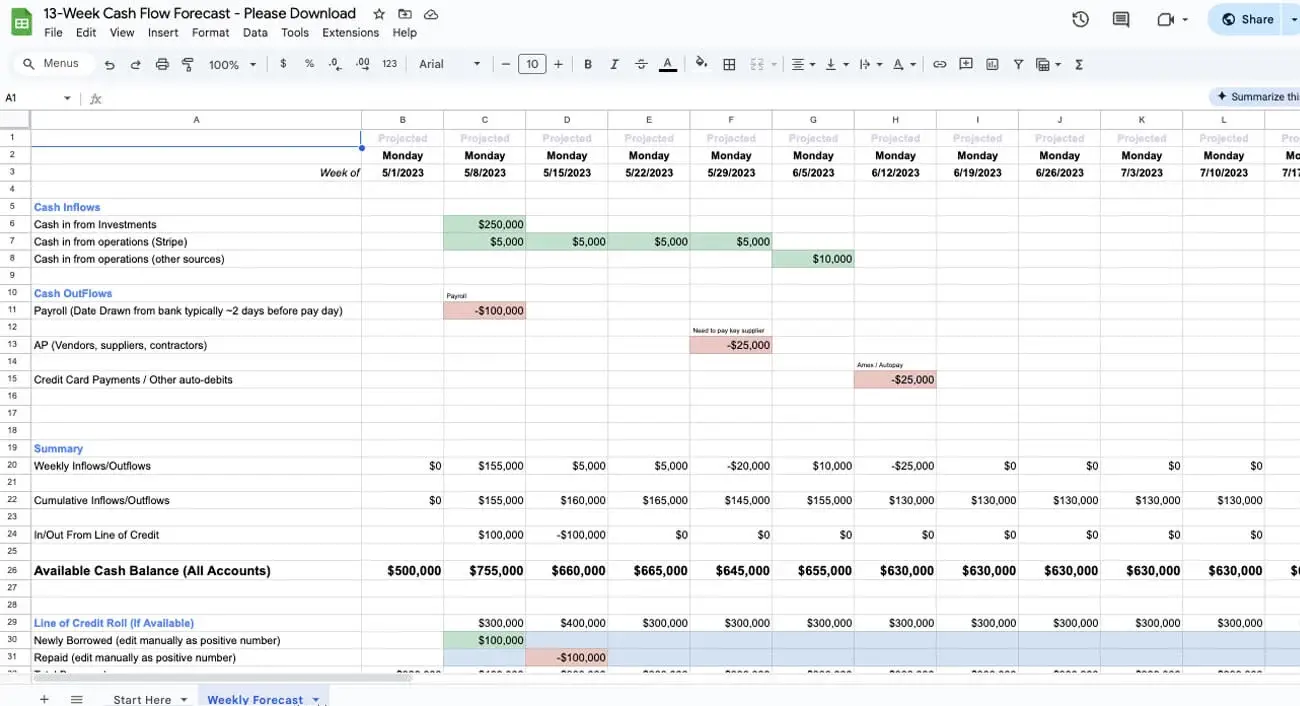
Knowing these two numbers, startups can predict their monthly and annual burn rates. For instance, for startups that spend $80,000 per month and only earn $40,000, the monthly burn rate is $40,000. You can multiply this by 12 to determine the annual burn rate.
Keep in mind that early-stage startups are going to have a higher burn rate than those that are more established and getting closer to profitability.
Calculating gross burn rate and net burn rate is a simple formula, but you need to gather a lot of information. You'll also likely have to make regular adjustments to account for revenue and timing differences, not to mention any hidden costs that inflate the actual burn rates. Here's an overview:
Gross burn rate is equal to your total monthly operating expenses. To determine this number, you'll have to add together all of your startup's monthly cash outflows. These include:
Be sure to include recurring expenses and fixed costs in the gross burn rate calculations in the months they occur in. Recurring expenses are more predictable than one-time expenses, which should be included in the specific month to determine gross burn rate for a specific period. Recurring expenses include things like payroll, rent and software subscriptions, while one-time expenses may be equipment purchases, marketing campaigns or legal fees.

Cash runway is the time your startup has to operate before it runs out of capital. It's directly related to your startup's net burn rate and is calculated using this formula:
Remember, net burn is your burn rate minus any revenue your startup has earned. By calculating your cash runway, you can strategically plan fundraising timelines and better forecast how long your startup can operate before it needs new funding, must raise money, or reaches profitability. Your cash runway also helps identify areas of improvement and the adequacy of your cash reserves.
Ideally, early-stage startups should strive for a cash runway of 12-18 months.
While burn rates can vary significantly based on factors such as industry of operation, funding stage and business model, early-stage startups tend to have a burn rate of about $50,000 per month. Seed-stage startups tend to spend more, perhaps as much as $200,000 per month, while startups in Series A state may spend more than $1 million per month. Series B and beyond tend to increase and vary more based on hiring, scaling and marketing efforts.
One of the key burn rate differentiators is by market. SaaS startups tend to have high initial burn rate measures as they hire people and create software. Marketplace and hardware startups tend to have moderate and inconsistent burn rates, respectively, due to the nature of their businesses.
Benchmarks should always be adjusted to reflect geographic and market conditions and to safeguard financial health.

Generally speaking, your startup's burn rate is too high when it results in an inefficient cash runway of under 12 months, especially if the burn rate isn't being offset by revenue and you consistently show negative cash flow. If your burn multiple is higher than 1, that's also problematic for your burn rate. It's important to recognize unsustainable burn patterns before your startup hits a point of crisis.
A burn multiple is a metric that measures how much your startup spends to create new annual recurring revenue. It helps show your startup's capital efficiency and indicates how wisely it is using cash to grow. Think of it like this: A burn multiple is indicative of how many dollars you spend to generate one dollar of ARR. It can be used to gauge growth efficiency. Your startup should strive to lower it over time, as this tends to signify more efficient growth.
Calculate the burn multiple using this formula:
Burn multiple = Net burn / Net new ARR
A healthy startup has unit economics that show a customer's lifetime value exceeds the money spent to acquire them. In other words, if your LTV is less than your CAC, then your business is not on a path to profitability and your unit economics do not support your burn rate.
If unit economics don't support your burn rate, consider reducing expenses or improving customer retention to improve your LTV. Keep in mind that if your burn rate is too low, your startup should consider being more aggressive and increasing spending on marketing or product development to streamline growth toward sustainable positive cash flow.
How can your startup optimize burn while maintaining growth?

Reducing burn rate without hampering growth involves multiple strategies, such as identifying non-essential expenses and renegotiating contracts. You can then calculate burn rate with these non-essential monthly expenses and help your monthly revenue.
Start by determining where your startup can cut costs without impacting its profitability. This might involve:
Whether to hire employees or contract out work depends on your startup and its situation. Outsourcing finance services can often represent significant cost savings while still ensuring your startup has access to expert financial professionals.
Any burn rate story you're telling to investors should help build confidence while maintaining transparency to build trust. You should strive to tell a financial story in any presentation, and certainly, your burn rate is a part of that. Aim to present burn rate in the context of milestones and value creation, and address high burn rates and investor concerns with action plans that prove your startup leadership is committed to fixing it.
Just how much runway do you need to generate before fundraising? It depends.
Align your burn rate with your fundraising strategy and calculate accordingly to ensure you can hit key milestones. Also, don't discount delays or market downturns that could impact your plans.
Ready to optimize your burn rate so you can hit your fundraising and financial goals? Graphite Financial is here to help. As a leading financial services provider, we specialize in helping startups extend their runway in a sustainable and strategic manner. We know that better burn management leads to better fundraising outcomes and can set startups up for success. Contact us today for more information or to schedule a consultation.
While a "good" burn rate depends on several factors and the current state of your startup, a typical average monthly burn rate for early-stage startups is about $50,000, and a common rule of thumb is to aim for a cash runway of one year to 18 months. Burning through cash too fast can indicate poor capital usage and cause investors to pause, while burning through cash too slowly can show stagnation, making it important to strike the right balance. Furthermore, early-stage startups tend to have higher burn rates as they grow, while more mature startups should strive for lower burn rates.
Monthly burn rate is calculated using the net burn rate formula:
Gross burn represents the total cash that's spent each month on all operating expenses, while net burn is the cash your startup loses after accounting for revenue. Think of gross burn as representing the total monthly expenses and cost to run your startup and net burn as your startup's actual cash outflow and runway.
A high or uncontrolled burn rate can cause leadership to make significant changes to how they're operating the startup and also make it harder to secure funding from investors. Generally, startups should start worrying about burn rate when they have less than 12 months of runway or when their current burn rate is unsustainable. Spending shouldn't outpace growth as your startup matures, as this can pose problems proving a path to profitability with investors.
Early-stage startups should shoot for 18-24 months of runway, while more mature startups should strive for 24-36 months. The greater the runway, the better your startup is prepared to navigate uncertainty when it arises. Runway is also important for strategic planning and improving your startup's fundraising position.
The burn multiple measures how much your startup spends to create new annual recurring revenue. It helps show your startup's capital efficiency and indicates how wisely it is using cash to grow. Investors closely watch this metric to gauge a startup's sustainability, resilience and overall business operation.
Cutting staff isn't the only way startups can reduce burn rate. Other options include enhancing operational efficiency, negotiating for more favorable terms with vendors and suppliers, and optimizing marketing spend where it's most effective.
Investors expect a higher burn rate at Series A fundraising because startups should be using more capital to scale their overall operations. At this stage, startup burn multiples tend to be between 1x and 2x, meaning the growth is one to two times its burn rate. This indicates accelerated growth and the potential of a significant return on investment.
Ideally, startups should aim to balance growth and reduce burn. The key is to do this strategically, managing burn rate while ensuring that spending is aligned with growth objectives.

1 min read
Of all the metrics that your startup should be familiar with, two of the most important are burn rate and cash runway. Burn rate is the rate at which...

1 min read
The early stage fundraising landscape for Fintech and SaaS startups reached record highs in 2021. The right strategies can help put your Fintech and...